
Volatility Explained India Players
Volatility Explained for India Players
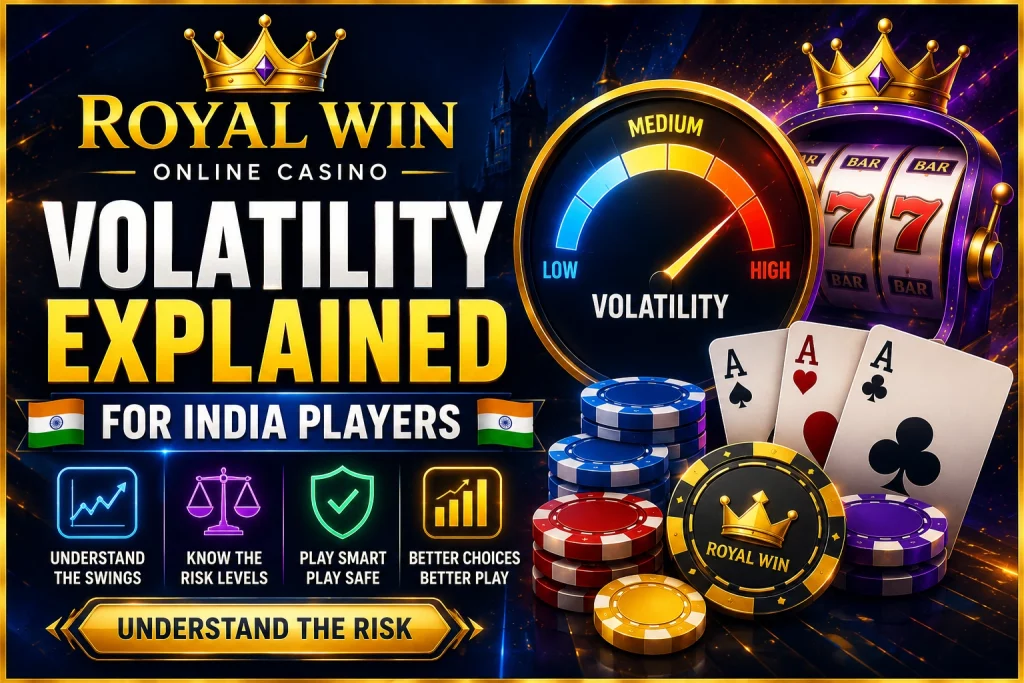
Volatility is one of the most important casino game terms for India players to understand before choosing a title. It describes how strongly results may fluctuate during play. In simple terms, volatility shows whether a game usually produces smaller, more frequent outcomes or larger, less frequent outcomes. It does not tell a player when a win will happen, but it helps explain the rhythm and risk profile of a game.
For Royal Win readers, volatility should be treated as a practical guide, not as a promise. A low-volatility game may feel steadier because it can return smaller results more often. A high-volatility game may feel sharper because it can produce longer quiet periods and larger balance swings. Both types still involve chance, and neither removes the risk of losing money.
Why Volatility Matters Before Choosing a Game
Players often focus on RTP first, but volatility can affect the real session experience more directly. Two games may have similar RTP numbers but behave very differently. One game may keep the balance moving slowly with frequent small outcomes. Another may stay quiet for many rounds and then create a larger payout event. The return percentage may look similar, but the emotional and financial experience can feel completely different.
This is especially relevant for mobile casino users in India because short sessions are common. A player may open a game during a quick break and expect a smooth experience, but a high-volatility game may not behave that way. Understanding volatility helps users choose games according to session length, budget and comfort with balance swings.
How Volatility Differs from RTP
RTP and volatility are connected, but they are not the same. RTP describes the long-term return model of a game. Volatility describes how uneven or stable the result pattern may feel. A game can have a high RTP and still be highly volatile. Another game can have a lower RTP but feel more consistent during short sessions.
This distinction matters because India players sometimes assume that a higher RTP automatically means safer play. That is not accurate. RTP gives a long-term mathematical reference. Volatility explains the path that results may take along the way. The path can be smooth, uneven or highly unpredictable depending on the game design.
Why Volatility Does Not Predict the Next Result
Volatility does not predict what will happen next. It only describes the general distribution style of the game. A high-volatility game is not guaranteed to pay because it has been quiet. A low-volatility game is not guaranteed to keep returning small results. Randomness still controls individual outcomes.
This is why volatility should never be used as a betting system. It is better understood as a planning tool. A player can use volatility information to decide whether a game fits their budget and session style, but not to forecast future results.
| Volatility Point | What It Means | Why India Players Should Know It |
|---|---|---|
| Low volatility | Results may appear more often, but they are usually smaller. | It can suit shorter sessions where players prefer steadier balance movement. |
| Medium volatility | The game may balance moderate payout frequency with moderate payout size. | It can feel more flexible for players who want mixed session behaviour. |
| High volatility | Results may be less frequent, but stronger payout events may be possible. | It can create sharper balance swings and requires stricter budget control. |
| Different from RTP | RTP explains long-term return, while volatility explains result distribution. | A high RTP game can still feel risky if volatility is high. |
| Responsible use | Volatility should help with planning, not prediction. | For broader digital awareness, players can review MeitY India. |
How Volatility Affects Session Planning
Volatility matters most when players think about session size and budget. A low-volatility game may allow a longer session on a smaller balance because outcomes tend to appear more frequently. That does not mean the player is protected from loss, but the session may feel less abrupt. A high-volatility game can move differently. It may require more patience, stronger limits and acceptance that long quiet periods are possible.
For India players, this is a key point. A game should not be chosen only because it looks exciting or has dramatic bonus features. The user should understand whether the game’s rhythm fits their planned play style. If a player wants a short casual session, a very high-volatility title may not match that expectation.
Why Volatility Should Be Explained Clearly
A strong casino education page should explain volatility in plain language. Many users see terms such as low, medium or high volatility but do not fully understand what they mean in practice. Without explanation, players may choose games based only on graphics, feature names or recent results.
Royal Win can make this topic more useful by connecting volatility to real player decisions. The page should explain how session length, stake size, balance movement and emotional control relate to volatility. This creates a more expert and trustworthy article than generic promotional content.
How Volatility Shapes the Player Experience
Volatility changes how a casino game feels during real play. A low-volatility title may create a steadier rhythm, while a high-volatility title can feel uneven, sharper and more unpredictable. For India players, this difference matters because the same budget can behave very differently depending on the selected game type.
A user may enter a game expecting a casual session, but if the title has high volatility, the balance can move quickly without many intermediate results. Another player may prefer frequent small outcomes and feel more comfortable with lower volatility. The important point is that volatility does not make a game better or worse by itself. It shows how the result pattern may behave.
Why Volatility Should Be Checked Before Playing
Volatility should be reviewed before the first stake is placed. It helps players understand whether the game suits their session length and comfort level. A short mobile session may not fit a high-volatility game because the player may not see many meaningful outcomes before the session ends. A longer planned session may handle variance more comfortably, but it still requires a fixed budget.
This is why game information panels are important. If a platform gives players access to volatility details, RTP, rules and payout structure, the user can make a more informed choice. For Royal Win, explaining this clearly helps the page feel like a real casino guide rather than a generic description.
Why Low Volatility Can Feel More Stable
Low-volatility games often appeal to players who prefer smoother balance movement. They may produce smaller outcomes more often, which can make the session feel more active and less abrupt. This does not remove risk, but it can create a playing rhythm that feels easier to follow.
For India players who prefer short sessions or cautious pacing, low volatility may feel more suitable. The main advantage is not guaranteed safety. The advantage is that the game design may create more frequent feedback. Still, users should remember that even low-volatility titles can produce losses, especially if stakes are increased too quickly.
Why High Volatility Needs Stronger Limits
High-volatility games can be exciting because they may include larger potential outcomes, dramatic features and sharper session movement. The same qualities also create more risk. A player may go through long periods without meaningful returns, and the balance can fall quickly if stakes are not controlled.
This is why high-volatility titles should be approached with fixed limits. A player should decide in advance how much they are willing to risk and should not increase stakes only because the game feels “close” to a feature or payout. Volatility can create pressure, but the player remains responsible for session control.
How Royal Win Can Explain Volatility Without Hype
Royal Win can build a more credible India-focused page by explaining volatility as a decision-making tool. The article should not describe high volatility as automatically better or low volatility as automatically safer. Instead, it should show how different volatility levels fit different expectations.
This approach makes the content more useful for real users. Players receive practical guidance on game rhythm, budget planning and risk awareness. That is stronger than generic casino wording because it helps the reader understand how games may actually feel during play.
How Volatility Changes Across Game Categories
Volatility is not limited to one type of casino game. It can appear differently across slot-style titles, table games, instant games and live dealer formats. For India players, this matters because the same word can describe different practical experiences depending on the category. A high-volatility slot-style game may involve long gaps between feature rounds, while a higher-risk table strategy may create sharp balance movement through stake choices and bet types.
Royal Win should explain volatility as part of game education, not as a promotional label. A player browsing a casino lobby should understand that game pace, feature structure, payout range and decision style all affect how volatile a session may feel. This helps users choose games more carefully instead of relying only on graphics, recent outcomes or large advertised multipliers.
Why Slot-Style Volatility Feels Different
In slot-style games, volatility is often connected to feature frequency, symbol value, paylines, multipliers and maximum payout structure. A low-volatility title may produce more frequent smaller outcomes, while a high-volatility title may place more value inside rare features or larger potential events. This is why Slots can feel very different even when they appear similar visually.
A player may open two reel-based games with similar themes and still experience completely different balance movement. One game may create regular small returns, while another may stay quiet for longer periods. The design behind the game matters more than the theme on the screen.
Why Game Features Can Increase Perceived Volatility
Game features can make volatility feel more dramatic. Free spins, multipliers, expanding symbols, bonus buys, jackpots and special rounds often change how value is distributed inside the game. A player may not see meaningful results for several rounds because the game’s design places more value inside feature events.
This does not mean a feature is close after a quiet period. It only means that the game’s payout structure may be concentrated around certain events. Players should avoid increasing stakes because a feature “feels due.” That is a common mistake in volatile games and can lead to faster losses.
Why Bonus Rules Should Be Checked with Volatility
A Bonus can change how a player experiences volatility because promotional rules may restrict stake size, eligible games or wagering contribution. A high-volatility game may look attractive during bonus play, but the user must understand whether it is allowed and how it contributes to wagering.
Before using any promotional funds, players should read the terms carefully. Some games may contribute less toward wagering, while others may be excluded. Volatility can also affect how quickly a bonus balance changes, especially if the player chooses high-risk titles with larger balance swings.
How Mobile Access Affects Volatility Awareness
Mobile play can make casino sessions faster and easier to enter. If a user opens Royal Win through an App or mobile-optimised page, they may move from lobby to game in only a few taps. This convenience is useful, but it can also reduce the time spent reviewing rules, volatility and stake settings.
A strong mobile casino page should make volatility information easy to find. The player should not need to search through hidden menus to understand risk level. Clear labels, game info panels and visible responsible play tools can help users make better decisions before they start.
Why Volatility Education Improves Game Browsing
Volatility education helps players browse the casino lobby with more context. Instead of choosing a title only because it has bright visuals or a large advertised prize, users can ask better questions: how often does this type of game usually return results, how sharp can balance movement feel, and does this match the session I planned?
For Royal Win, this creates a more professional site structure. Educational pages can connect naturally to game rules, payment guides, support pages and responsible play content. That makes the platform feel more like a real casino knowledge hub and less like a simple promotional landing page.
Why Volatility Knowledge Should Lead to Better Control
Volatility is most useful when it helps players make calmer decisions before a session begins. It is not a prediction tool, and it does not show when a payout is close. It explains how uneven a game may feel and how sharply the balance may move. For India players, that knowledge can reduce unrealistic expectations and help with safer session planning.
A player who understands volatility is less likely to react emotionally to quiet rounds, near-miss visuals or sudden balance swings. The goal is not to avoid all risk, because casino-style games still involve uncertainty. The goal is to understand the type of risk before choosing a game.
Why High Volatility Should Not Be Treated as a Shortcut
High volatility can sound attractive because it is often linked with larger potential outcomes. That does not mean it is a shortcut to better results. It usually means the game may produce less frequent meaningful returns and stronger balance movement. A player may need to go through longer quiet periods without seeing the type of result the game is designed around.
This is why high-volatility games require strict limits. If a player starts increasing stakes because the game feels close to a feature, the session can become risky very quickly. The better approach is to decide the budget first and avoid changing the plan based on emotion.
How Volatility Supports Smarter Game Selection
Volatility helps players choose games according to session style, not only visual design. A user who wants steady play may prefer a different title from someone who accepts stronger variance. This makes game selection more realistic and reduces disappointment when a title behaves differently from expected.
Royal Win can use volatility education to help users compare game categories with more confidence. The page should guide readers toward understanding pace, payout distribution and balance movement rather than only showing attractive game names. This makes the content more useful and more credible.
Why Responsible Limits Are Essential with Volatile Games
Responsible limits are especially important when volatility is high. A player cannot control when a game produces a result, but they can control stake size, session time and total budget. These are the practical decisions that matter most.
Before playing, users should decide how much they can afford to risk and avoid changing that amount because of frustration or excitement. Volatility can create emotional pressure, but a fixed limit prevents the session from becoming reactive.
Final View on Volatility for India Players
Volatility explains how a game may distribute results. It does not promise wins, predict payout timing or make a game safer by itself. Low volatility can feel steadier, medium volatility can feel balanced, and high volatility can create stronger swings. Each style has a different player experience.
For India players, the best approach is to use volatility as an awareness tool. Combine it with RTP, game rules, stake planning and responsible limits. That creates a more informed way to choose casino-style games and helps avoid decisions based on hype, emotion or false patterns.






Comments