
Self Exclusion India Options
Self Exclusion India Options
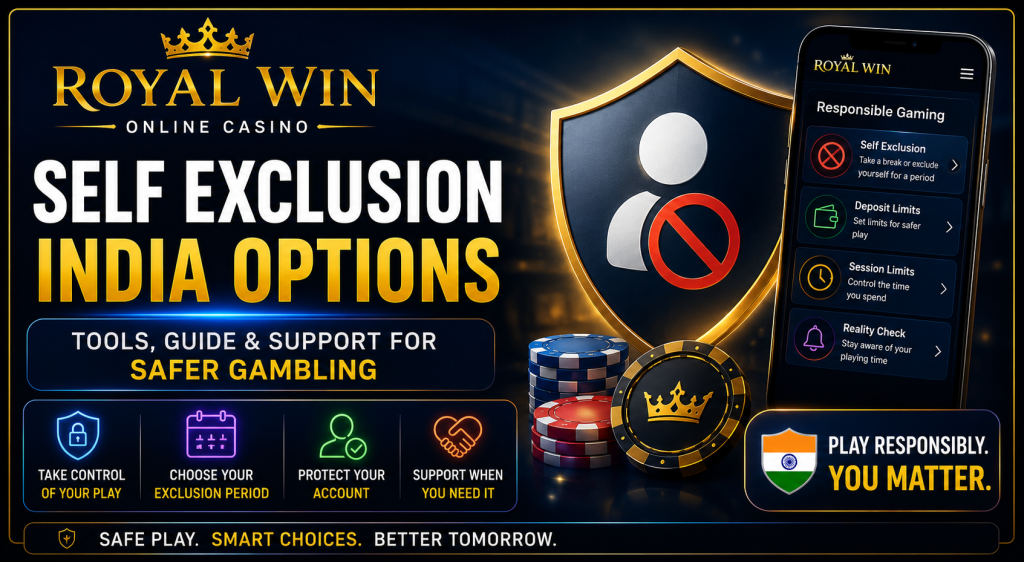
Self-exclusion is one of the most effective responsible gambling tools available to players who want to stop or limit access to gambling activities. Unlike simple spending limits, self-exclusion creates a stronger barrier between the player and gambling services. For India players, understanding how self-exclusion works can be an important step toward maintaining control or addressing gambling-related concerns before they become more serious.
A self-exclusion request is usually voluntary. The player decides that gambling access should be restricted for a defined period or permanently. During this time, access to gambling services may be limited according to the rules of the platform. Self-exclusion is not a punishment. It is a practical support measure designed to help people step away from gambling when they feel that control is becoming difficult.
Why Self-Exclusion Is Different From Taking a Break
Many players confuse self-exclusion with a short break. A break is usually temporary and can often be removed quickly. Self-exclusion is more structured and is designed to create meaningful distance between the player and gambling activity.
This distinction matters because people who are experiencing gambling-related harm often return too quickly after a short pause. Self-exclusion helps reduce impulsive decisions by making access restrictions stronger and more formal.
For Royal Win readers, self-exclusion should be viewed as a responsible gambling tool rather than a last resort. It can be useful whenever gambling starts to interfere with financial goals, emotional wellbeing or daily responsibilities.
Why Early Action Creates Better Outcomes
People often wait until gambling problems become severe before considering self-exclusion. In reality, earlier action usually produces better results. A player does not need to reach a crisis point before using protective tools.
Some reasons players choose self-exclusion include:
• Repeated loss chasing.
• Difficulty sticking to limits.
• Gambling during emotional stress.
• Spending more than planned.
• Hiding gambling activity.
• Feeling unable to stop voluntarily.
Recognising these behaviours early allows players to take action before gambling causes greater harm.
How Responsible Account Controls Support Safer Gambling
Responsible gambling tools should be accessible from account settings and support sections. Whether a player uses the Login page regularly or only occasionally, access to responsible gambling controls should remain visible.
A strong responsible gambling system includes limit tools, self-exclusion options, account review features and educational resources. Players should never have to search extensively to find help information when they need it.
| Option | Description | Purpose |
|---|---|---|
| Cooling-Off Period | Short-term access restriction. | Provides immediate distance from gambling. |
| Temporary Self-Exclusion | Account access restricted for a defined period. | Supports medium-term recovery goals. |
| Long-Term Exclusion | Extended restriction selected by the player. | Helps maintain stronger boundaries. |
| Permanent Exclusion | Account closure or indefinite restriction. | Suitable for serious gambling concerns. |
| Support Resources | Educational and digital safety information. | Players may review MeitY India for broader online awareness resources. |
Why Self-Exclusion Should Be Respected
A self-exclusion decision is most effective when it is treated seriously. The purpose is to create distance from gambling activity. Attempting to bypass restrictions, open alternative accounts or immediately seek other gambling platforms weakens the value of the tool.
Self-exclusion works best when combined with practical changes such as reviewing finances, discussing concerns with trusted people and reducing exposure to gambling-related content.
Why Gambling Recovery Involves More Than Account Restrictions
Self-exclusion is valuable, but it is not the only step in recovery. Many players benefit from examining the reasons behind their gambling behaviour. Stress, boredom, emotional pressure, loneliness or financial concerns may contribute to unhealthy gambling patterns.
Addressing these underlying factors can help create long-term improvements. Responsible gambling support should therefore combine account controls with education, self-awareness and external support where appropriate.
Why Self-Exclusion Supports Responsible Gambling
A self-exclusion page should communicate a simple message: taking a break from gambling is a responsible decision, not a failure. The ability to recognise risk and act early demonstrates self-awareness and personal responsibility.
For Royal Win, self-exclusion content should connect naturally with responsible gambling resources, payment controls and support information. This creates a safer player experience and encourages informed decision-making.
How Self-Exclusion Works in Practice
Self-exclusion is most useful when it creates a clear barrier before another gambling session begins. A player who feels unable to stop should not wait for a better mood, a better result or a larger win. The practical purpose of self-exclusion is to interrupt access while the person still has enough clarity to act.
For India players, this can be especially important because online gambling access is often fast and private. If a gambling site can be opened in seconds, a short moment of stress may turn into another session. Self-exclusion helps reduce that immediate pathway and gives the player time to step back.
Why Account Restrictions Should Be Easy to Find
Responsible gambling tools should be visible from account settings, help pages and support sections. A player who wants to stop should not need to search through promotional pages or game menus. The route to restriction should be short, direct and clear.
Royal Win can make this stronger by placing self-exclusion information near responsible gambling resources, account controls and payment pages. This helps users move from concern to action without delay.
Why Self-Exclusion Should Include Bonus Blocking
Players who choose self-exclusion should also avoid promotions. A Bonus can create pressure to return, especially when it includes time limits, wagering rules or attractive headline amounts. For someone trying to stop gambling, promotional messages can weaken the barrier that self-exclusion is meant to create.
A stronger system should reduce marketing exposure during exclusion. The player’s focus should be distance, recovery and support, not new offers.
Why Mobile Access Needs Stronger Safeguards
Mobile gambling can make access feel automatic. If a person can open an App or mobile casino page in seconds, self-exclusion tools become more important. Stronger safeguards reduce the chance of returning during stress, boredom or financial pressure.
For Royal Win, the self-exclusion page should explain mobile risk clearly. Fast access is convenient for casual users, but for vulnerable players it can make stopping harder.
How Self-Exclusion Affects Game Access
Self-exclusion should reduce access to casino activity, not simply pause one page or one feature. When a player chooses exclusion, the goal is to create a meaningful barrier between the person and gambling sessions. This can include account access restrictions, deposit blocking, promotional suppression and support guidance.
For India players, this matters because online gambling can be highly accessible. A user may move quickly from a game lobby to a deposit page or from a promotion to a new session. Self-exclusion should interrupt that path clearly and consistently.
Why Game Access Should Not Undermine Recovery
A self-excluded player should not be encouraged back into gambling through game recommendations, promotional banners or quick access routes. The purpose of exclusion is to create distance. If the site continues to show high-pressure prompts, the support value of the tool becomes weaker.
Royal Win should present self-exclusion as a serious responsible gambling measure. Once a user chooses it, the platform should guide them toward help content, account information and safer play resources instead of casino activity.
Why Slot and Game Access Should Be Restricted During Exclusion
During self-exclusion, access to Slots and other casino categories should be restricted according to the selected exclusion rules. This is important because vulnerable players may return through a familiar game type, especially if the title is fast, visual or linked to previous loss chasing.
The same applies to the broader Games section. A self-exclusion system should not leave easy routes back to the lobby. If the player has chosen distance, the platform should support that decision instead of presenting new game options.
Why Help Pages Should Replace Game Prompts
A self-exclusion flow should guide users toward help, not entertainment. Instead of showing game recommendations, the platform should show support information, account restriction details and responsible gambling resources. This helps the player focus on recovery, not return.
A visible FAQ section can explain how exclusion works, how long it lasts, what happens to account access and where to find support. Internal Links should connect the exclusion page to responsible gambling, support, payment controls and gambling addiction help content.
Why Self-Exclusion Should Be Treated as a Serious Decision
Self-exclusion is not a casual setting. It is a protective action for people who need space from gambling. The decision should be respected by the player and the platform. Attempting to bypass it through new accounts or alternative access weakens its purpose.
For Royal Win, the clearest message is that exclusion exists to protect control. If gambling has become stressful, secretive or difficult to stop, self-exclusion is a valid and responsible step.
Why Self-Exclusion Should End with a Clear Recovery Plan
Self-exclusion works best when it is part of a wider recovery plan. Blocking access is important, but the player also needs replacement habits, financial review, emotional support and clear rules for avoiding gambling triggers. For India players, this is especially relevant because online access can be fast, private and easy to restart without strong boundaries.
Royal Win should explain self-exclusion as a serious protection tool. It should not be presented as a small account setting. If a player chooses exclusion, the platform should guide them toward support resources, responsible gambling content and account restrictions that help maintain distance from gambling activity.
Why Returning After Exclusion Needs Caution
When an exclusion period ends, returning to gambling should never be automatic. The player should review why exclusion was needed, what changed during the break and whether gambling still creates risk. If the same pressures remain, extending the exclusion or using stronger restrictions may be safer.
A responsible self-exclusion guide should make this clear. The end of an exclusion period is not a signal to restart. It is a moment to review control, finances, emotional state and support needs.
Why Self-Exclusion Should Be Connected to Help Pages
A self-exclusion page should not end with the restriction itself. It should guide players toward gambling addiction help, responsible gaming guidance, account controls and support content. Clear internal Links can help users move from exclusion to recovery planning instead of returning to game pages.
This structure is important because self-exclusion is often chosen during a stressful moment. A player should immediately see what to do next: keep access blocked, avoid promotions, review finances and seek support.
Final View on Self Exclusion India Options
Self-exclusion is a responsible gambling tool for players who need distance from casino activity. It can support recovery by restricting access, reducing promotional pressure and giving the person time to rebuild control.
For India players, the best approach is to treat self-exclusion as a serious protective step. If gambling has become stressful, secretive or difficult to stop, extending restrictions and using support is safer than returning too quickly.






Comments